Dock Builder Website Design: How to Pick the Right Website Partner and Avoid Costly Mistakes
Dock builders do not win work with pretty websites alone. They win when the site makes a homeowner, marina manager, or waterfront property investor feel one thing quickly: these people know what they are doing, and they work where I need them.
That sounds simple, but it is where a surprising number of contractor websites fail. I have seen sites for skilled trades that bury the service area, hide the phone number, use stock photos that could belong to any company in any state, and never explain what kind of projects they actually handle. A dock builder website design has to do more than look clean. It has to establish trust fast, answer practical questions, and make the next step obvious on a phone screen.
If you are hiring a website partner, the bigger risk is usually not paying too much up front. It is getting tied to a site that looks fine at launch but becomes expensive, hard to update, and impossible to control later. That is where costly mistakes happen.
The real job of a dock builder website
People shopping for dock construction or repairs are often making a high-trust, high-ticket decision. They are not buying a simple commodity. They may be concerned about shoreline conditions, long-term durability, storm exposure, permits, or how the finished dock will fit the property. Even when your site cannot answer every technical question, it should prove that your company works in this niche and understands the local market.
That is why dock builder website design should be specific, not generic. A generic contractor site might mention “quality craftsmanship” and “customer satisfaction” and leave it there. A stronger site explains what kind of dock work you do, where you do it, and how someone can start the conversation. It shows relevant project photos, not random construction imagery. It gives visitors confidence that your company is established, reachable, and active.
For a lean contractor site, you do not need dozens of pages to be effective. But you do need the essentials done well. In most cases that means a homepage that immediately says what you do and where, service pages or at least a services section, an about page, a service-area page, and a contact page. If your business is expanding into new markets or adding new offerings, that is when a more robust build starts to make sense.
Why the wrong website partner costs more than the cheap quote suggests
A low quote can feel like a win until the hidden costs appear. That is especially common in contractor website redesign projects. The site launches, then you find out every text change costs extra. Hosting is separate. Security is separate. Backups are not included. No one explained who owns the domain or the hosting account. You want to add a new service page next season and the provider is slow to respond or impossible to reach.
This is where owners start asking, how much does a contractor website cost? The honest answer is that the number depends as much on the service model as the design itself.
For small contractors, websites are typically bought in one of four ways: a do-it-yourself builder, a freelancer, an agency, or a managed website for small business. Each path can work. The trade-off is usually cost versus speed, support, and how much ongoing maintenance you want handled for you.
If you are hands-on, detail-oriented, and have time, the best website builder for contractors may be a DIY route. If your needs are simple and your budget is tight, that can be reasonable. But many contractors do not actually want a second job managing plugins, edits, security, backups, and site issues. They want the site to work while they focus on estimates, crews, materials, and scheduling.
A freelancer can be a good fit when you have a clear vision and want a more custom touch than a builder offers. The challenge is continuity. If that person gets busy, changes careers, or disappears, your site can become difficult to maintain. Agencies can provide more process and support, but they also tend to come with higher upfront costs and longer timelines.
That is why managed subscriptions have become attractive for many home-service companies. A managed website for small business typically bundles the technical side into one ongoing service, often including hosting, security, backups, updates, and support. For a contractor who values simplicity and steady help more than owning a pile of disconnected vendors, that model can solve a lot of headaches.
What a strong website partner should understand about contractor marketing
A web designer for contractors needs more than design taste. They need to understand how people hire local service businesses. For a dock builder, that means knowing the site has to communicate trade and location immediately. If a visitor lands on your homepage, they should not have to guess whether you build residential docks, repair damaged structures, or work in their area.
That same principle applies across niches. Pool screen enclosure website design, concrete coating website design, epoxy flooring website design, mold remediation website design, home remodeling website design, and flooring contractor website design all work best when the site speaks clearly to the actual service and the real geography. The pattern is consistent: visitors want fast clarity, mobile usability, obvious contact options, and proof that the company does this work for clients like them.
A strong website partner knows that contractor websites are not portfolio sites in the artistic sense. They are trust-and-conversion tools. Good design matters, but not in isolation. If the site is beautiful and confusing, it is weak. If it is sleek and slow on mobile, it is weak. If it looks modern but does not mention your service area or show what kind of jobs you take on, it is weak.
What to ask before you sign anything
This is where a lot of expensive mistakes can be avoided. Before you commit to any builder, freelancer, agency, or managed provider, you need clarity on the practical details that affect long-term control.
- Who owns the domain, and is it registered in your business’s name?
- Who controls the hosting account and the core website logins?
- What is included after launch, such as hosting, security, backups, updates, and edits?
- If the relationship ends, can you move the site and keep your content?
- How are future changes handled, and what costs extra?
Those five questions sound basic, but they reveal a lot. A reliable provider https://serviceswebsiteguide196.terracolumn.com/posts/how-missed-call-text-back-can-help-home-service-businesses-capture-more-leads should answer them directly. Hesitation is a warning sign. Vague answers are a warning sign. If someone acts like ownership and access do not matter, that is a serious problem.
I have watched contractors get stuck with a site they effectively rent without understanding the terms. The provider controls everything, the owner has no access, and changing partners later becomes messy and expensive. A website should help your business grow, not trap it.
Hidden costs that catch contractors off guard
The biggest budget mistake is comparing website options by launch price alone. The cheaper proposal often leaves out work you will still need. Copywriting is a common example. If the proposal covers design but expects you to write every page, gather every image, and structure all the service content, the project can stall fast.
Hosting and security are another area where “cheap” builds get expensive. Some providers quote a build and leave you to sort out SSL, backups, updates, and maintenance later. Then there are edit fees. A site that seems affordable can become a constant drip of charges if every phone number change, new service area, or added gallery image requires a paid request.
This is why the answer to how much does a contractor website cost should always include context. A lean site can be enough if you mainly need a credible online presence. If your goal is stronger lead generation, multiple service pages, broader service-area coverage, or regular updates, spending more can be justified. The value is not in buying the most expensive option. It is in matching the site and support level to how your business actually operates.
When a contractor website redesign is the right move
Sometimes the right decision is not a brand-new strategy. It is admitting the current site is no longer doing the job.
A contractor website redesign usually makes sense when the site feels dated, loads slowly, is hard to edit, is not mobile-friendly, lacks trust signals, or no longer reflects your current services and service area. I would add one more practical test: if you are embarrassed to send someone to it after a sales call, that matters. Owners often know when a site is costing them confidence.
For dock builders, this shows up in very specific ways. Maybe your business started with repairs and now you do more full dock construction. Maybe your service area expanded to nearby waterfront communities. Maybe your old site has one generic services page when you now need more detailed messaging around installation, repair, or related work. A redesign becomes worthwhile when the site no longer fits the business you actually run.
What the homepage needs to do in the first few seconds
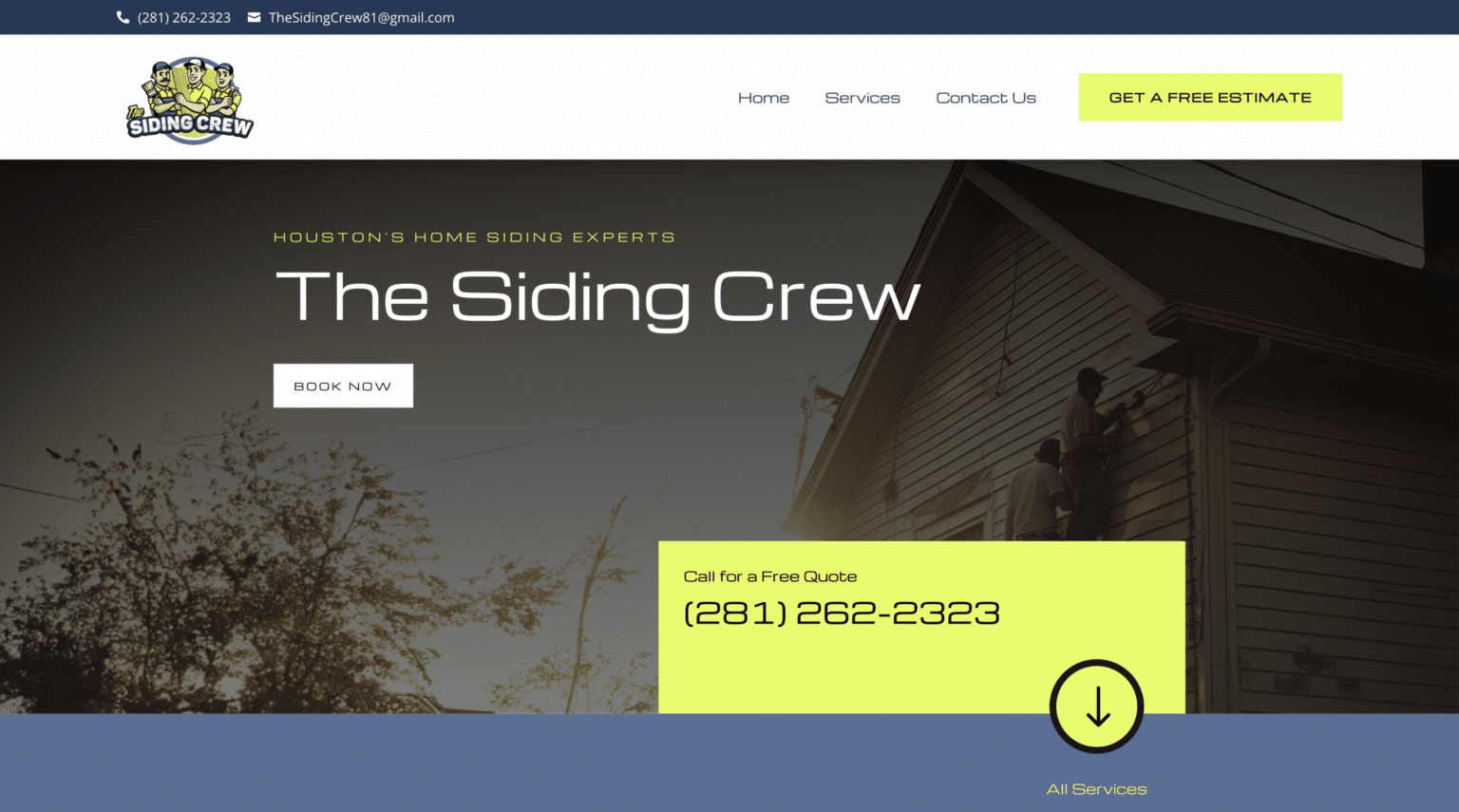
A contractor homepage has one job before all others: remove confusion. The visitor should know what you do, where you do it, and how to contact you almost immediately. On mobile, that means the phone number and call to action need to be easy to find. The page should load quickly, read clearly, and avoid burying the basics under clever design.
For dock builder website design, that first screen should usually communicate the trade and location clearly. It should also look like a legitimate contractor business, not a hobby operation. Real job photos help enormously when they are specific to the work. A visitor should see docks, waterfront structures, materials, shoreline settings, and finished results that make sense for the service.
One of the fastest ways to weaken trust is using imagery that feels borrowed from a completely different trade. Homeowners can tell when something feels off, even if they cannot explain why. Authenticity carries weight.
The difference between a site that sits there and a site that helps you sell
Many contractors think of the website as an online brochure. That is fair up to a point, especially for small businesses that get much of their work from referrals. But even referral-driven companies benefit from a site that supports the sale instead of merely existing.
Think about what happens after someone hears your company name. They search, click, and scan. If the site confirms your credibility, your referral gets stronger. If the site feels outdated or vague, your referral weakens. That is true whether you build docks, install screen enclosures, apply coatings, remediate mold, remodel homes, or install flooring. Across all these trades, the website often acts as the second handshake.
This is where service pages matter. If your work is broad, one catch-all page may not be enough. If you want to compete in several areas or promote distinct services, the site needs room to explain them clearly. That does not mean bloating the site with filler. It means giving each core service enough space to be understood.
Red flags that should stop you from hiring a provider
Some warning signs are subtle. Others are obvious. Either way, you ignore them at your own expense.
- The pricing is vague, or important items are missing from the proposal.
- You are not given clear ownership or access to the domain, hosting, or site accounts.
- There is no defined plan for backups, security updates, or ongoing maintenance.
- The provider cannot explain what happens after launch, including edits and support.
- They focus heavily on appearance but lightly on contractor-specific messaging and usability.
A provider does not need to use the exact phrases you would use, but they should demonstrate sound judgment. They should understand that a contractor website is a business asset, not just a design exercise.
Managed websites can be a smart fit for busy contractors
For many owners, especially those who do not want to babysit technical details, a managed model makes sense. A managed website for small business is built around convenience and continuity. Instead of piecing together design, hosting, updates, security, backups, and support from separate places, you get them bundled.
That matters more than it may seem. Most contractors are not short on work ethic. They are short on time. If your site needs changes, or if you add a service area, or if something technical breaks, you need help without turning it into a week-long headache.
One example in this space is Scalable Websites, a Houston, Texas based provider serving contractors nationwide. Their model is a monthly subscription for professionally designed contractor websites, with hosting, security, unlimited updates, and a dedicated project manager included. Most sites launch in days. For the right business, that kind of arrangement can be appealing because it reduces technical burden and keeps support in one place. If you want to evaluate whether that style of service fits your situation, you can reach them at (832) 979-2478.
That does not mean a managed service is automatically better than every alternative. It means the model solves real problems for owners who value speed, support, and predictability over doing everything themselves.
How to decide what level of website you actually need
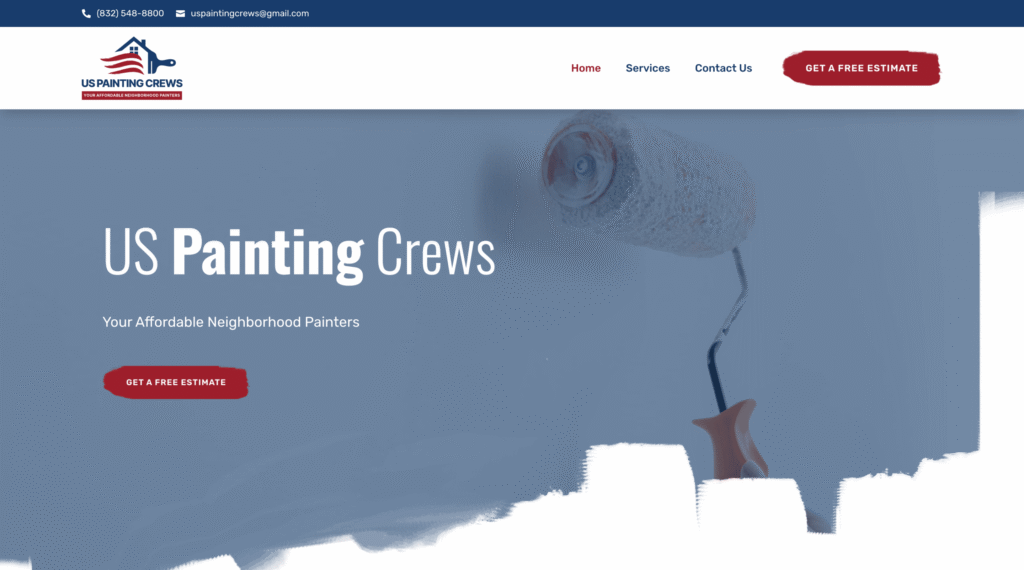
The right site depends on how you generate work now and how you want to grow. If most of your jobs come through reputation and local referrals, a lean, credible site may be enough. In that case, clarity and professionalism matter more than complexity. You need a site that reassures people, represents the company well, and makes contacting you easy.
If you are trying to expand into more locations, promote several types of work, or strengthen lead generation, your site needs to do more. That is when a more developed structure starts paying off. More service pages, stronger service-area content, and regular updates become more valuable because the site is doing active business development, not just passive validation.
This is where many owners overspend or underspend. They either buy a large, expensive site before they need it, or they buy the cheapest possible option and outgrow it almost immediately. The best choice usually sits in the middle: enough structure to support your business today, with room to grow without rebuilding from scratch six months later.
A final test for any website partner
Before you hire anyone, imagine a simple scenario. Six months from now, you want to add a new service page, update a few photos, and expand into a nearby service area. How easy will that be? How long will it take? Who handles it? What will it cost? And if the relationship ends, can you take your site with you?
Those answers matter more than polished sales language.
A good website partner will help you avoid the trap of buying a site that is technically live but strategically weak. They will build something clear, mobile-friendly, and grounded in how contractor customers actually choose who to call. They will also respect a basic truth that too many providers ignore: your website should belong to your business, support your growth, and stay useful after launch.
For dock builders, that standard is not high maintenance. It is just disciplined. Say what you do. Show where you work. Make it easy to contact you. Use real trade-specific proof. Know who owns what. Understand what ongoing support is included. If the partner in front of you cannot make those fundamentals feel straightforward, keep looking.